
TL;DR
HVAC line set protection helps systems meet code, avoid weather and mechanical damage, maintain efficiency, cut repair costs, and reduce environmental risks. Proper covers and insulation keep refrigerant lines safer, longer-lasting, and more reliable in residential and commercial installations.
HVAC installations can be tricky, especially in commercial and multi-story buildings, where staying code-compliant is crucial. Whether you are a building manager, HVAC contractor, or property owner, two key codes you need to follow are:
International Mechanical Code (IMC)
International Residential Code (IRC)
While compliance is important, following these codes also helps you avoid HVAC installation mistakes, improve system safety, boost performance, and prevent costly repairs down the road. Whether you are installing a new system or maintaining an existing one, understanding HVAC line set protection will keep your system running smoothly for years.
What Are the HVAC Line Set Protection Codes?
The International Mechanical Code and International Residential Code outline requirements for refrigerant piping protection, making sure HVAC systems operate safely and efficiently worldwide.
IMC 1109.2.2 specifies that refrigerant piping must be protected by being located within building elements or within protective enclosures. This means that the pipes should either be built into the structure or enclosed in protective covers to prevent damage from external elements. In some cases, the line set may be exposed, but only in areas where it won’t risk damage, such as near units or out of reach.
The IRC M1411.6.1 goes further, addressing the protection of refrigerant line insulation. It mandates that insulation exposed to the weather must be shielded from environmental damage like sunlight, moisture, and wind. This keeps the insulation intact, preventing performance issues or leaks.
According to Section N1103.4.1 (or R403.4.1), materials like adhesive tape are prohibited because they don’t offer adequate protection from solar radiation, which can degrade the insulation over time.
Why Is HVAC Line Set Protection Important?
Adhering to these codes is critical not just for compliance but also to prevent potential system failures and costly repairs. Proper HVAC line set protection keeps your system running smoothly while meeting all regulatory requirements. It also offers several other benefits.
Here’s why you should pay attention to HVAC line set protection:
1. Prevents Weather Damage
HVAC systems are exposed to the elements, meaning they are vulnerable to weather-related damage. The HVAC line set insulation plays a critical role in protecting refrigerant pipes, but if not adequately shielded, it can deteriorate.
HVAC lineset insulation that’s exposed to direct sunlight, rain, or snow can break down, impacting the efficiency of the system. By using protective coverings like HVAC wall penetration & line-set cover kits, you prevent moisture damage, UV radiation, and even wind that can harm the insulation.
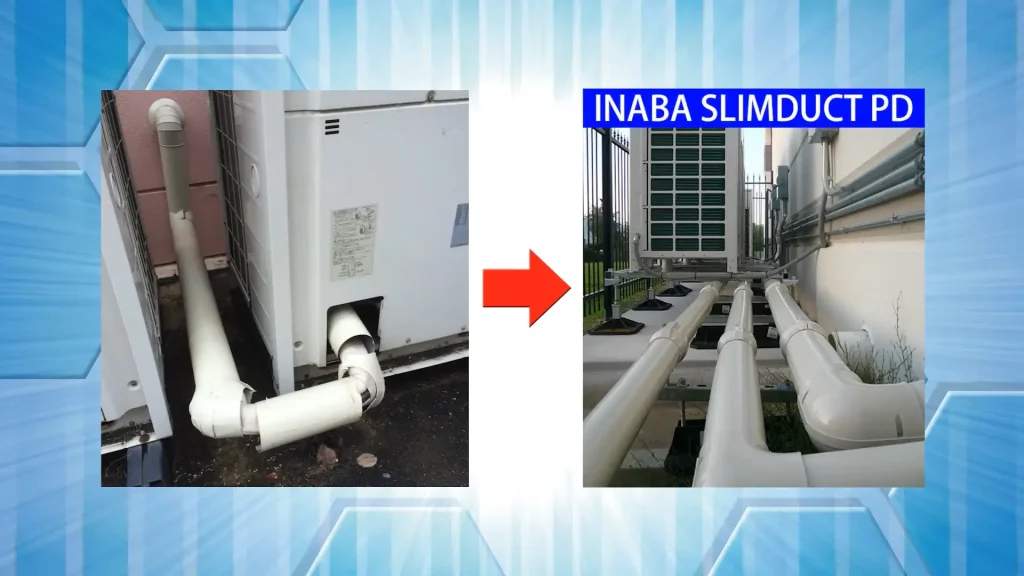
For instance, the Slimduct SD Wall Inlet protects line sets as they enter exterior walls, keeping them safe from weather, pests, and damage. Likewise, the Slimduct SD Straight Duct protects exposed line sets mounted on walls. It also boosts curb appeal, thanks to its sleek design. Protecting the HVAC lines this way increases the longevity of the pipes and the system as a whole.
2. Protects Against Mechanical Damage
Improperly protected line sets are vulnerable to physical damage. In busy commercial and residential environments, accidental bumps or hits from equipment can lead to punctures or ruptures. While you can use an HVAC line set tape without proper additional protection, it can be easily compromised.
Adding a line set cover or enclosure, like the Slimduct RD Commercial Lineset Cover, shields the lines from accidental knocks, maintaining the integrity of the system. It’s a sleek, cost-effective solution if you want to protect and conceal multiple linesets in VRF or VRV systems.
3. Improves System Efficiency
A key part of your HVAC system’s efficiency is the insulation around the refrigerant lines. Insufficient protection can cause heat loss or gain, reducing overall system efficiency. With proper HVAC line set protection, you help the system maintain optimal temperature control and reduce energy consumption. If the lines are damaged, you might see drops in performance, leading to more energy use and higher costs.
4. Prevents Code Violations and Expensive Repairs
The IMC and IRC require that refrigerant piping be protected to avoid damage. This is not just for your safety. It also helps you avoid fines or repairs related to code violations.
In fact, choosing reliable, code-compliant HVAC line set protection solutions helps your system pass inspections without issues. The initial investment in line set protection could save you from costly repairs later..
5. Protects the Environment
Not only does HVAC line set protection help with system efficiency, but it also protects the environment. By preventing leaks and making sure refrigerant stays contained within the system, you are also helping to reduce the risk of harmful chemicals entering the atmosphere. Properly insulated and protected lines keep your HVAC system running cleanly and with minimal environmental impact.
6. Reduces Maintenance Costs
By investing in quality HVAC line set protection during the initial installation, you can save money in the long term. A well-protected line set is less likely to develop issues that require costly repairs or replacement. Preventing damage from the start helps you avoid the potential for frequent maintenance calls.
Protect Your System With the Right Line Set Solution
At the end of the day, HVAC line set protection is one of the simplest ways to avoid common installation mistakes and help your system hold up over time. When you choose the right approach for HVAC line set insulation, you are not just meeting code; you are making your installation cleaner, safer, and built to last.
If you want a cleaner, more professional finish, Inaba Denko America offers products that make HVAC line set protection and system installation easier from start to finish. Our line set covers and installation accessories are built for reliability, convenience, and a polished look you can feel good about using on every project.
Contact us now to know more about our products and accessories.
FAQs
1. What is HVAC line set protection, and why is it important?
HVAC line set protection refers to the materials or enclosures used to shield refrigerant lines and insulation from weather, sunlight, moisture, wind, and physical damage. It matters because exposed line sets can break down over time, reduce system efficiency, and create code-compliance issues during installation.
2. Is the HVAC line set tape enough to protect refrigerant lines?
No, adhesive tape is not an acceptable long-term solution for protecting exposed piping insulation. While HVAC line set tape may be used in limited situations, it should not replace proper protective enclosures or code-compliant covering systems.
3. What can happen if the HVAC line set insulation is left exposed?
When HVAC line set insulation is left unprotected, it can deteriorate from UV exposure, moisture, wind, and general wear. That damage can lead to reduced thermal performance, higher energy loss, and a shorter lifespan for the overall HVAC system.
4. Are there code requirements for HVAC line set installation?
Yes, mechanical and residential codes like IMC 1109.2.2 require refrigerant piping and exposed insulation to be protected from damage and environmental exposure.
5. What is an HVAC wall penetration & line-set cover kit used for?
An HVAC wall penetration & line-set cover kit helps create a cleaner, more professional installation while protecting the line set where it enters and exits the building. It can also help reduce exposure to weather and physical damage while improving the finished appearance of the system. Inaba Denko America offers several kits for the same.
