
TL;DR
Schedule cooling service in spring and heating inspections in fall to avoid peak season breakdowns. Between visits, replace filters, check drains and insulation, seal wall openings, and keep outdoor units clear. Protect refrigerant lines from weather and pests. Heat pumps need both visits; commercial systems often require quarterly professional maintenance.
When did your heating or cooling system last get a proper checkup? If you can’t remember, you’re probably not alone. Many homeowners wait until their air conditioner stops cooling or their heating system struggles on a cold morning before scheduling service. Unfortunately, those are also the times when HVAC contractors have their busiest schedules.
Seasonal HVAC maintenance helps your system run efficiently, manage energy costs, and stay reliable throughout the year. But maintenance involves more than checking the equipment. Your refrigerant lines, drain hoses, insulation, and wall openings also need attention. Small problems in these areas can affect performance and lead to expensive repairs.
Here is a practical guide to scheduling HVAC service and keeping your heating and cooling system in good condition every season.
1. Why Timing Matters
Spring and fall are the best times to book service. The weather is mild, technicians have more openings, and wait times are shorter.
If you wait for peak season, you’re more likely to pay emergency fees. You could also go several days without heating or cooling while you wait for an appointment.
The rule of thumb is to book cooling service in spring and heating service in fall. Homes with a heat pump or mini split heat pump should schedule both because the same system handles heating and cooling.
2. Spring: Book Your Cooling Tune-Up
Try to book your cooling tune-up between March and May, before the hot weather arrives. An early appointment gives you time to handle any repairs without rushing.
During the visit, your technician checks refrigerant levels, coils, electrical connections, the thermostat, and airflow. These checks catch small problems before they become costly.
Your part is easy. Change the filters and clear leaves, grass, and debris away from the outdoor unit so it has room to breathe.
Take a close look at the condensate drain as well. A clogged drain is one of the more common causes of water around cooling equipment and can lead to damage inside your home.
For drain hose exposed to sunlight, consider the DHQ Drain Hose (UV Resistant). DHQ uses a double-layer construction and offers greater UV resistance than the standard DH series.
Cut sections of DH or DHQ hose can be joined with the DHJ Drain Hose Coupler. However, the DHJ coupler and other DHQ accessories are not UV-resistant. Outdoor connections should be protected from weather according to Inaba Denko’s installation guidance, such as by taping or enclosing them within an appropriate Slimduct cover.
3. Summer: Quick Checks While the System Works Hardest
You don’t need a full service visit in summer, but a quick check each month helps you catch trouble early. Your cooling system is under heavier demand, so performance problems can become easier to notice.
Watch for these warning signs:
- Warm air coming from the vents
- Short cycling, where the system turns on and off too often
- Ice forming on the refrigerant lines
- Water pooling near indoor units
- A sudden jump in your energy bills
While you’re outside, look over the refrigerant line insulation. Insulation that is cracked, flaking, or damaged by the sun makes the system less efficient and leaves the lines exposed. One way to protect your refrigerant lines is to use an HVAC lineset cover.
For residential exterior linesets, a cover such as Slimduct SD can protect the piping from weather, UV exposure, pests, and physical damage while giving the installation a cleaner finish.
Larger commercial installations may call for a different type of protection. One three-story apartment building in Allentown, PA, used Slimduct RD, Inaba Denko’s metal commercial lineset cover, to protect exposed refrigerant piping from outdoor conditions.
4. Fall: Schedule Your Heating Inspection
Book your heating inspection between September and early November, before the first cold night. That way, your heat is ready when you need it.
For furnaces, the technician checks the burners, heat exchanger, ignition, flue, and carbon monoxide safety. These checks protect your family’s comfort and safety.
For heat pumps, the technician checks the defrost cycle, reversing valve, outdoor coil, and refrigerant charge. Each one affects how well your system heats when temperatures drop.
Fall is also a good time to seal any gaps where line sets enter your building. Open gaps let in drafts, moisture, and insects, and leaving them unsealed is one of the most common HVAC installation mistakes.
You can use AP Sealant Putty to fill openings around HVAC piping. For residential installations using Slimduct SD, the SWC Wall Flange provides a finished transition where the lineset cover meets the wall.
Before the cold sets in, change your filters again and test the thermostat in heating mode. If the heat is slow to start, tell your technician.
5. Winter: Protect Outdoor Equipment and Lines
Keep your outdoor unit clear of snow, ice, and debris all winter. If the unit is buried under snow or debris, it can’t move air properly, which puts extra strain on your system.
Make sure defrost water drains away from the unit and doesn’t freeze around the base. Ice buildup can damage the coil and block airflow.
Check your line sets for sections that have come loose or started to sag. Snow and wind can pull lines out of place, which stresses the fittings and insulation. Use HVAC line set hangers like the VS Double Saddle to hold your lines firmly against the wall.
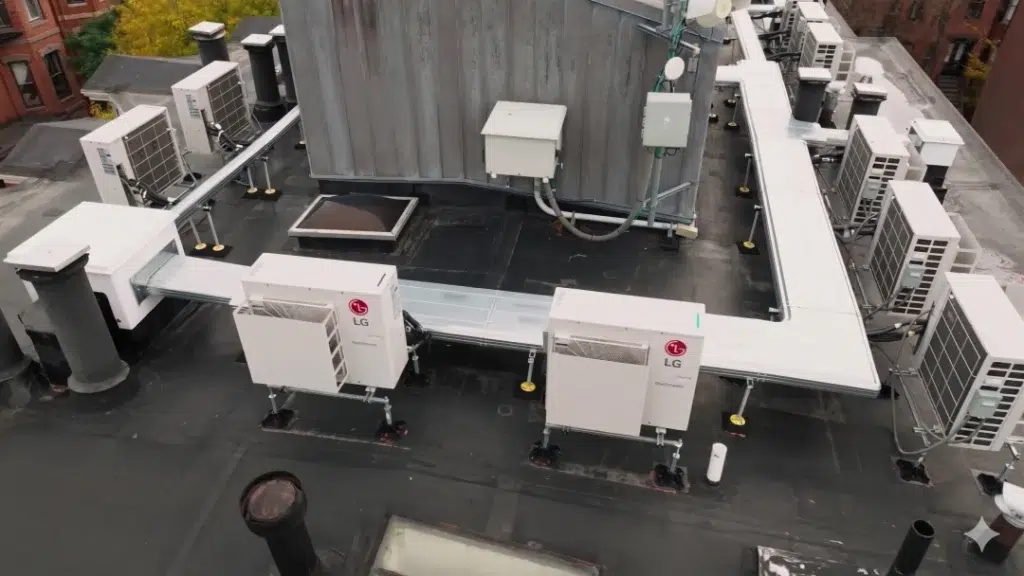
Commercial rooftop installations need the same attention. Meadowbrook Place in Ontario, Canada, used Slimduct RD to cover and protect refrigeration piping and related wiring on its commercial heat pump system.
For piping supported from 3/8-inch threaded rod, Inaba Denko’s PL Pipehook provides a quick-install hanger for insulated pipe without compressing the insulation. It is intended for this specific type of support rather than as a general-purpose rooftop anchor.
6. Indoor Air Quality between Seasons
Each time the season changes, replace your filters, clean the vents, and check your indoor humidity. These small steps make a real difference in how your home feels. Dirty filters and clogged drains can spread mold, dust, and allergens through your rooms. Keeping them clean helps everyone in your home breathe easier.
If you have refrigerant lines routed through finished indoor spaces, Slimduct MD is made specifically for indoor piping. It’s designed to give installers a clean way to conceal linesets along interior walls.
Commercial projects can have different needs once the piping moves outside. Raritan High School in Hazlet, NJ, completed an HVAC upgrade using 21 Trane VRF systems to improve indoor air quality. The project also used Slimduct RD to protect exposed refrigerant piping from outdoor conditions.
7. Commercial Buildings Need More Frequent Service
Commercial HVAC systems typically run longer hours than home systems, putting more wear on their components. That’s why they often need quarterly service rather than two visits a year.
Check rooftop and exterior line sets at every service visit. Keeping them neatly routed with accessible covers makes inspections and repairs easier, saving your maintenance team time and effort.
In earthquake-prone areas, the BGK Seismic Brace helps secure equipment and lines during ground movement. Properly installed HVAC sleeves also protect lines as they pass through structural walls.
Quick Reference: Seasonal HVAC Maintenance Calendar
- Spring: Cooling tune-up and drain lines. Book service.
- Summer: Watch performance and check line set insulation. Book only if problems show up.
- Fall: Heating inspection and sealing wall openings. Book service.
- Winter: Keep the outdoor unit clear and check supports. Book only if problems show up.
Keep Your Seasonal HVAC Maintenance On-Point
Two professional visits a year, plus a few simple checks each season, keep your system reliable and efficient. That small effort helps you avoid emergency calls when the weather turns extreme.
Protecting your line set, drain, and wall penetrations is part of good seasonal HVAC maintenance, not an afterthought. Taking care of these details helps your whole system last longer.
For Inaba Denko America’s product details and installation guidance, visit the Technical Library and the FAQ page. If you’re planning an upgrade or need a new system, contact us to see how our products can make your job easier and more efficient.
Frequently Asked Questions
How often should HVAC systems be serviced?
Most homes need service twice a year, while many commercial systems need it every quarter. You should schedule your seasonal HVAC maintenance based on your needs.
Is spring or fall better for heat pump maintenance?
Both. Your heat pump handles heating and cooling, so it needs a visit before each season.
Can sun damage line set insulation?
Yes, UV exposure can break down exposed line set insulation over time. For residential exterior installations, Slimduct SD can help protect refrigerant lines from sun, weather, and pests. Commercial rooftop and exterior VRF/VRV installations may call for a heavier-duty system such as Slimduct RD.
What if I skip seasonal HVAC maintenance?
If you skip maintenance, your system runs less efficiently, your bills go up, and breakdowns become more likely during peak times. The emergency repairs further add to your overall building maintenance budget.
