
TLDR:
Vertical HVAC line set installations need dedicated supports to manage pipe weight, thermal movement, insulation compression, alignment, and service access. Proper spacing, structural attachment, material compatibility, and cover coordination help protect fittings and improve long-term reliability. TKL LineBrace supports vertical risers and helps reduce expansion stress in demanding VRF and VRV applications.
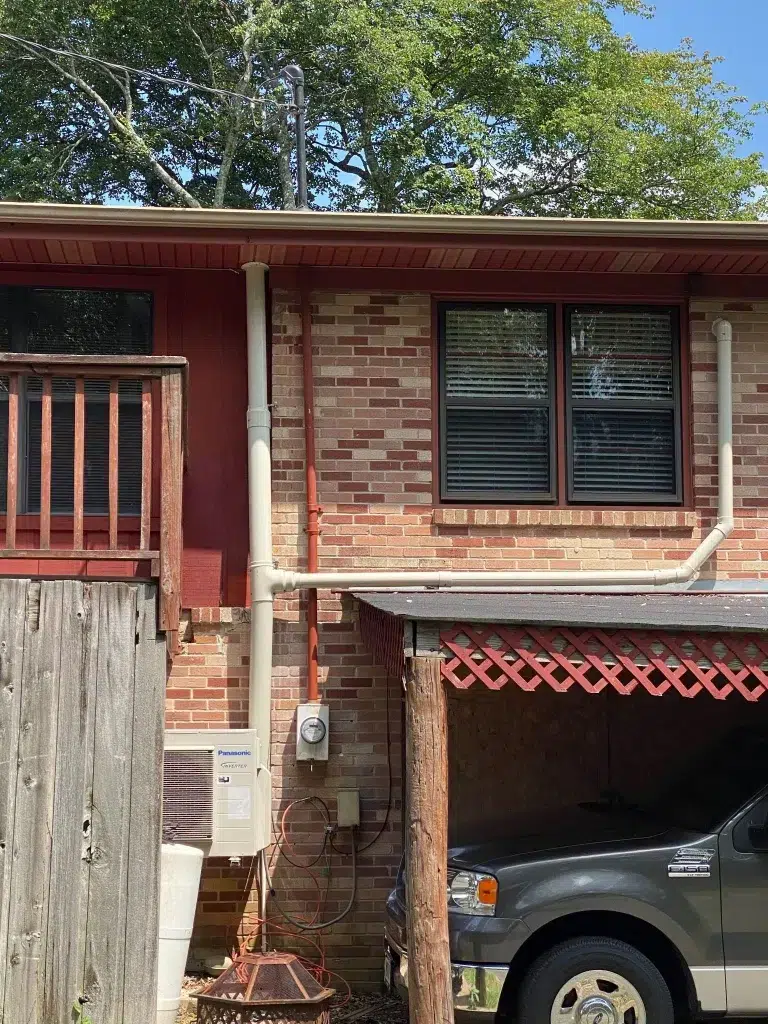
Vertical HVAC line set installations are common wherever refrigerant piping must rise or drop between floors. These vertical runs are often found in multi-unit buildings, commercial mechanical shafts, and VRF or heat pump systems where outdoor units are installed above or below the indoor equipment they serve.
These installations present unique challenges. Gravity places the combined weight of the refrigerant lines, insulation, and accessories on the lower sections of the riser. At the same time, temperature changes cause copper piping to expand and contract during system operation.
For this reason, the HVAC supports you choose must be designed to transfer the piping load safely and reliably to the building structure.
Why Vertical HVAC Line Sets Need Dedicated Support
Horizontal runs distribute load across many contact points along the length. However, a vertical HVAC line set travels in a single downward path. So, the support strategy has to change with the orientation.
Pipe Weight and Vertical Load
Copper tubing, insulation, fittings, and refrigerant charge all contribute to the total installed weight of a vertical run. Without defined support, that weight travels down the column and lands on the lowest fittings and connections.
Those joints are designed to maintain a refrigerant seal, not to carry structural loads. To protect the system, vertical runs need clear load transfer points along the riser so the piping is supported by the building structure, not by the lowest fittings, connections, or equipment interfaces.
Insulation Compression
Standard clamps often create a narrow contact point around insulated tubing. That concentrated pressure can bite into the insulation and lower its thermal performance at the support location. On cold suction lines, compressed insulation can also increase the risk of condensation.
Use HVAC accessories designed for insulated piping to spread contact across the surface. A wider footprint secures the line set while preserving the insulation thickness and maintaining a continuous vapor barrier.
How Pipe Supports Control Movement in a Vertical HVAC Line Set
Copper expands and contracts as refrigerant temperatures change. A vertical refrigerant riser can move repeatedly as the system switches modes, responds to load changes, or cycles between operation and standby.
For that reason, support hardware must do more than carry pipe weight. It must also control pipe position, guide movement, and limit how far the line set shifts as operating conditions change.
Thermal Expansion and Contraction
Refrigerant lines change length as pipe temperature rises and falls during operation. A vertical support layout should account for the expected movement across the full length of the run.
Each support should serve a defined purpose. Some supports carry the pipe load, some guide the pipe along its intended path, and others restrain movement at fixed points.
Specifying each type intentionally keeps the riser stable without locking it so tightly that thermal stress builds at fittings, joints, or equipment connections.
Alignment and Stability
Supports keep the pipe on a straight vertical path from the entry point to the equipment. Running equipment, service activity, wind, and outdoor exposure can gradually push an unsecured line out of alignment.
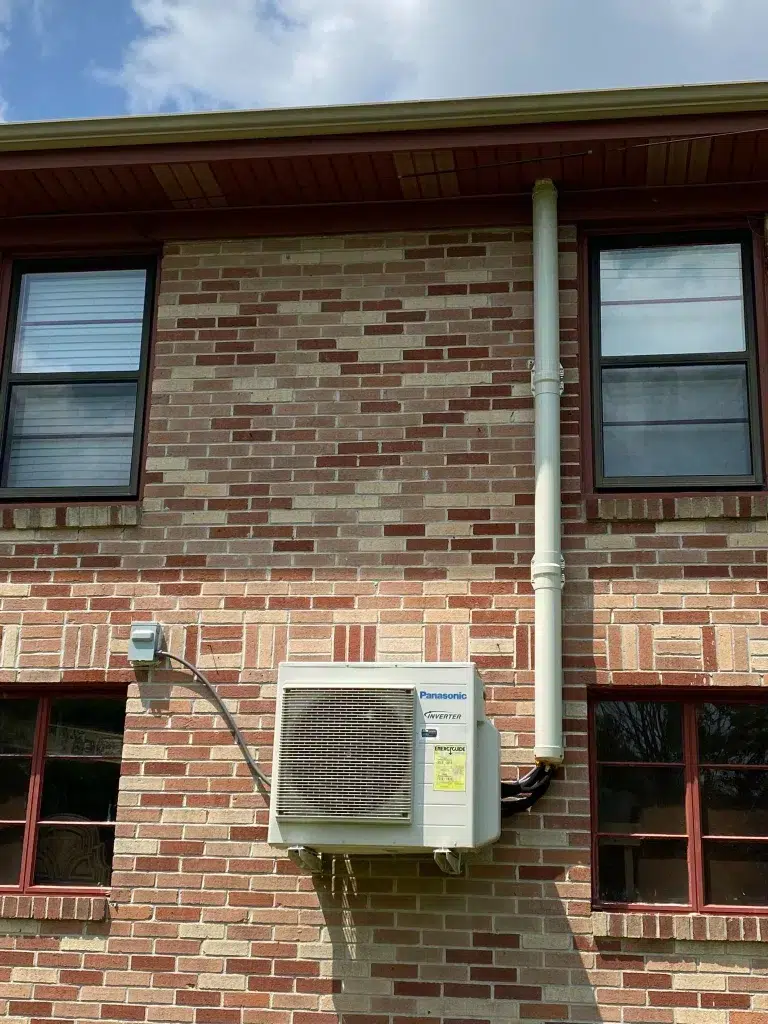
Consistent support keeps the run straight, stable, and clean against the building exterior. On visible facades and shared walls, a straight, evenly supported riser looks intentional and professional.
Key Design Factors for Vertical HVAC Line Set Installation
The vertical HVAC line set installation should also account for load, movement, environment, and attachment conditions.
Support Spacing
Spacing depends on pipe size, insulation thickness, total load, orientation, and manufacturer instructions. Local codes and project specifications may set additional limits, so review them before finalizing the layout.
One spacing value rarely fits every configuration. A larger insulated suction line and a smaller liquid line may require different intervals, so treat spacing as a calculation rather than a default.
Structural Attachment
Supports need a suitable wall, frame, or structural member behind them. Review the substrate and confirm the fastener capacity matches the load each support will carry.
Some projects include wind, seismic, or other loads in the calculation. Account for those forces where they apply, since an exposed or high-risk riser sees more than static weight alone.
Material Compatibility
Check contact between copper, fasteners, brackets, insulation, and exterior materials. Dissimilar metals can corrode, and poor pairings on exterior runs may fail early.
Select materials suited to the moisture, temperature, UV, and corrosion exposure the run will face. Keep sharp edges away from the insulation and tubing so the support does not cut into what it holds.
Integrate Pipe Supports with an HVAC Line Set Cover
Supports and covers should work as a single assembly. While an HVAC line set cover protects the run, the supports must fit within the space the cover allows.
Maintaining Clearance Inside the Cover
Size the channel for the refrigerant pipes, insulation, condensate drain, and any control cables sharing the route. Leave room for fittings and direction changes so the cover seats properly without forcing the contents.
Use each support to hold the pipe in position, not to push it against the cover wall. Any contact with the cover can compress the insulation and transfer vibration into the exterior panel.
Supporting Service Access
Keep removable cover sections accessible for future HVAC maintenance. Place the supports where they will not block joints, valves, or inspection points. Technicians will need to reach these during maintenance and repair.
Coordinate support locations with cover couplers and fittings during layout. If you install a support directly over a coupler, you make the cover harder to open and the joint harder to access.
Use TKL LineBrace for Vertical Refrigerant Piping
Inaba Denko developed TKL LineBrace to carry the weight of vertical VRF and VRV risers. It uses a central fixed support with conventional cushion-type clamps positioned above and below it.
The clamp attaches around the copper pipe and works with a molded insulation sleeve. This HVAC line support solution:
- Does not require brazing
- Effectively reduces thermal expansion by 50%
- Can be retrofitted on existing lines
- And holds 279-652 lbs
We have developed several other pipe support solutions. For example, our TKL-K Base Bracket supports wall-mounted vertical riser applications. It provides the structural connection between the LineBrace clamp and the supporting wall.
The TKL-U Base Bracket, on the other hand, provides a stable and secure anchor point at the upper end of vertical lineset risers. It’s perfect for HVAC line set installations where you need precise load management and long-term reliability.
Case Study: New York City Commercial Retrofit
Palone Bros., a fourth-generation Brooklyn HVAC contractor, installed three 14-ton LG VRF condensing units atop a 12-story commercial building on 5th Ave. The vertical riser piping ran 150 feet up through a shaftway with no future access for maintenance or repairs, so any leak from thermal expansion stress would have been effectively unfixable.
The contractor anchored TKL LineBrace brackets to the building wall and clamped them directly around the piping, with molded insulation built in to preserve thermal performance at each support point. They divided the riser into 75-foot upper and lower sections, directing expansion toward connected horizontal piping.
This approach mitigated the expansion risk in an inaccessible vertical run. It also helped Palone Bros. complete the HVAC line set installation quickly and effectively.
Build More Reliable Vertical Refrigerant Riser Routes
Installing a reliable vertical refrigerant riser starts with a support layout that accounts for pipe weight, thermal movement, insulation protection, structural attachment, and service access. When you plan these details early, you reduce stress on fittings, protect the insulation system, keep the run aligned, and help the installation perform cleanly over the life of the equipment.
Inaba Denko helps contractors, engineers, and distributors across North America with cleaner, more dependable HVAC line set installations. We provide purpose-built support solutions and HVAC accessories.
Contact us today to get a quote.
