
TLDR
Durable HVAC pipe supports protect refrigerant and drain lines from sagging, corrosion, and damage. Selecting the right material, insulation protection, weather resistance, and spacing helps maintain system stability, appearance, and serviceability. Inaba Denko America offers reliable HVAC pipe support solutions designed for long-lasting protection in residential and commercial installations.
Did you know a reliable HVAC installation depends on more than the equipment you choose?
And one of the most critical components that frequently gets overlooked is the HVAC pipe support. It provides your refrigerant lines, drain lines, and rooftop piping with constant support. In other words, these products are built for daily exposure, vibration, and changing weather.
The right HVAC pipe support helps protect piping from sagging, rubbing, corrosion, and movement. When you choose the right support system, it helps your HVAC setup stay cleaner, safer, and easier to service over time.
Let’s learn the seven key factors you should consider when choosing HVAC pipe support for your system.
1. Choose a Pipe Support Built for the Right Application
Your first step is to match the HVAC pipe support to the job site. A support that works well for light wall-mounted piping may not be right for rooftop lines, long refrigerant runs, or commercial HVAC layouts.
Look at where the piping will sit, how much weight it carries, and how often service teams will access the area. Rooftop systems need support that can handle sun, rain, wind, and surface movement.
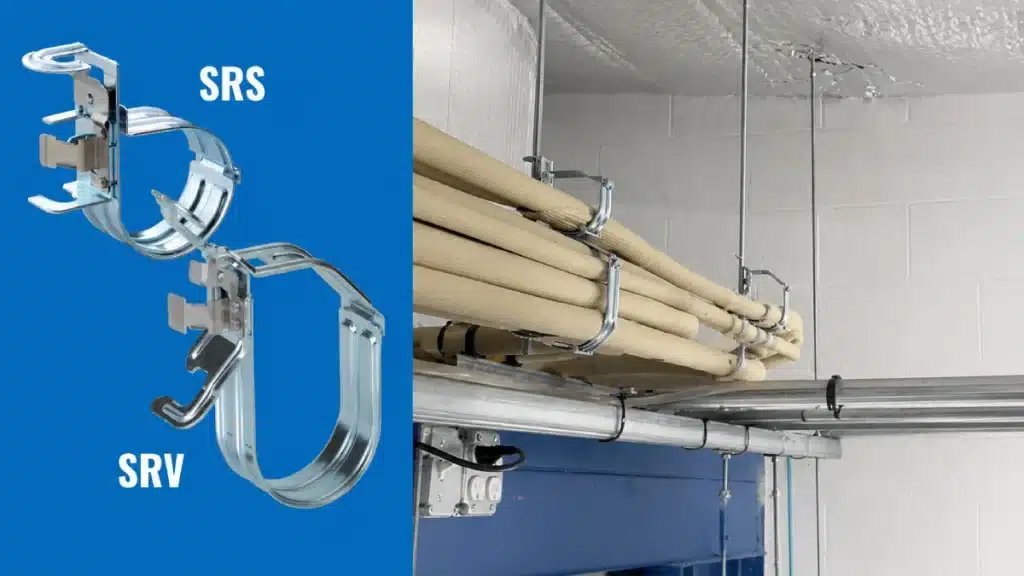
Wall-mounted systems need a clean fit that keeps the lines secure without making the installation look unfinished. Ceiling-supported pipes and linesets need a solution like the SRV SuperLock hanger, which offers firm support and easy height adjustments.
For mini-split, VRF, and heat pump systems, HVAC pipe supports should hold the piping in place without crushing insulation or creating stress points. A proper match helps protect the line set and keeps the system layout neat.
2. Look for Strong Material Quality
Other than regular maintenance, material quality determines how long your HVAC pipe supports will last. Poor-quality support materials can crack, bend, rust, or shift after exposure to outdoor conditions. Once that happens, the piping may lose support and become more exposed to damage.
So, look for materials that resist corrosion, moisture, UV exposure, and temperature changes. This matters more on rooftops, exterior walls, and exposed mechanical areas. HVAC piping typically faces heat in summer, freezing conditions in winter, and constant contact with moisture.
A good HVAC pipe support should stay stable through these conditions. It should also protect the pipe without reacting poorly with the insulation or metal surface.
3. Check Load Capacity and Spacing Requirements
Every HVAC pipe has weight. Refrigerant lines, drain lines, insulation, fittings, and connected accessories all add to the total load. If your supports are too weak or too far apart, the piping can sag over time.
Sagging can lead to poor appearance, strain on connections, insulation wear, and service problems. That is why load capacity matters when you choose HVAC pipe support products. For example, the SRS Superlock comes with a load capacity of 44 lbs, while the PL PipeHook version of SuperLock supports only 17 lbs.
You should review the pipe size, line length, and installation layout before choosing support spacing. Larger pipes need stronger support, and longer runs require more support points. Areas with vibration or rooftop exposure may need added stability.
Good spacing also helps protect the insulation. When a pipe sits evenly on the support, the insulation faces less pressure and less rubbing. This helps improve HVAC support across the full piping run.
If you are a contractor, proper spacing also creates a cleaner finished job. Your customers see a system that looks planned, organized, and professional. Besides improving curb appeal, it helps your maintenance crew to access the piping easily.
4. Choose Supports That Protect Insulation
HVAC insulation protects refrigerant lines from heat gain, condensation, and energy loss. If a pipe support damages the insulation, the system can lose performance, and the line may become more exposed to moisture.
You should choose HVAC pipe supports that hold the pipe without pinching, cutting, or wearing through insulation. Rough edges, tight clamps, and poor contact points can create long-term problems.
A good support design, like our SR-HGZ Insulation Protection Plate, which is designed for SuperLock hangers, spreads weight evenly and reduces friction. This helps your insulation stay intact through vibration, thermal movement, and daily system operation.
It’s a factor worth considering for both residential and commercial HVAC projects. On a home installation, damaged insulation can affect comfort and appearance. On a commercial roof, poor insulation protection can create repeated service calls.
5. Think About Weather and UV Exposure
Outdoor HVAC pipe support faces the weather daily. Sunlight can weaken low-quality plastics. Rain and snow can accelerate corrosion. Wind can move loose lines. Heat can cause expansion, while cold can make some materials brittle.
Your HVAC pipe support should match the climate and exposure level of the job. If your installation sits on a rooftop or exterior wall, weather resistance should be part of your product decision from the start.
UV-resistant materials help hold their shape and appearance under direct sunlight. Corrosion-resistant parts help protect the system in damp, coastal, or high-humidity areas. Stable materials also reduce the chance of cracking or movement during seasonal temperature changes.
This is where durable pipe supports give you long-term value. You may save time during installation with cheaper parts, but poor outdoor performance can cost more later through repairs, replacement, and customer complaints.
6. Consider Installation Speed and Service Access
The HVAC pipe support should also be practical for the installer. You need parts that fit correctly, install cleanly, and help the project move without extra field modifications. All pipe support products from Inaba Denko America are designed with this in mind.
The best HVAC pipe support helps you save labor while still giving the piping firm support. It should work with common HVAC layouts and allow contractors to keep lines organized.
You should also think about future service. HVAC systems need regular inspections, repairs, and maintenance. If the pipe support blocks access or creates a messy layout, technicians may spend more time on simple tasks.
A clean support layout gives service teams room to work. It also reduces the chance that someone will step on, pull, or disturb the piping during maintenance.
For rooftop and commercial systems, service access matters more. Maintenance teams may walk near the lines often. Proper HVAC pipe support helps keep piping raised, visible, and protected from accidental contact.
7. Choose a Brand That Supports Long-Term HVAC Protection
Choose HVAC accessories from a company that understands how contractors work and what North American HVAC installations require. A reliable HVAC pipe support should fit into your complete protection plan. That plan may include line set covers, drain hoses, mounting systems, and other accessories that protect the full installation.
When you choose a trusted source, you get more than a single part. You get product consistency, better fit, and support that helps your project meet professional standards. Inaba Denko America supplies HVAC pipe supports and accessories backed by Japanese engineering and supports distributors and contractors across North America.
Choose HVAC Pipe Supports That Protect the Full System
The right HVAC pipe support helps your installation stay stable, clean, and protected. You should look at application type, material quality, load capacity, insulation protection, weather resistance, installation speed, and brand support before you make a final choice.
Each factor helps protect the piping and the equipment it serves. A well-supported HVAC line set can reduce strain, protect insulation, improve appearance, and help your system last longer.
Inaba Denko America gives you HVAC accessories built for those who want dependable results. When you choose the right support system from the start, you give your customers a cleaner installation and stronger long-term protection.
FAQs About HVAC Pipe Supports
1. What is an HVAC pipe support?
An HVAC pipe support holds refrigerant lines, drain lines, or related piping in place. It helps reduce sagging, movement, rubbing, and damage during daily HVAC operation.
2. Why are durable pipe supports important for HVAC systems?
Durable HVAC pipe supports help protect piping from weather, vibration, and long-term wear. They also help your installation look cleaner and stay easier to service.
3. How do I choose the right pipe support spacing?
You should base spacing on pipe size, line length, weight, and job site exposure. Longer runs and heavier pipes usually need closer support points for better stability.
4. Can HVAC pipe support damage insulation?
Yes, poor-quality supports can pinch, cut, or wear down insulation. Choose HVAC pipe supports that spread weight evenly and protect the insulation surface.
5. Why choose Inaba Denko America?
Inaba Denko America supplies HVAC accessories engineered for quality, precision, and durability. We provide products designed for mini split, VRF, and heat pump installations across North America.
