
TL;DR
A mini split system uses refrigerant lines to move heat between indoor and outdoor units, providing energy-efficient heating and cooling without ducts. The system uses inverter technology to adjust speed based on temperature needs. This process improves comfort and reduces energy costs.
With easy installation, zoning control, and low maintenance, mini splits are excellent for both homes and businesses. Adding Inaba Denko accessories like Slimduct SD covers further boosts efficiency, protection, and appearance, supporting your longer-lasting HVAC investment.
Mini split systems are more in demand than ever.
Owing to several benefits like higher energy efficiency, installation flexibility, and higher performance, more and more people want to install mini splits. It’s no wonder that the US mini split system market is projected to reach $2.4 billion by 2034, growing at a CAGR of 4.9%.
Chances are, your contractor has already recommended one for your building. But what’s a mini split system? And more importantly, how does it work?
What Is a Mini Split System?
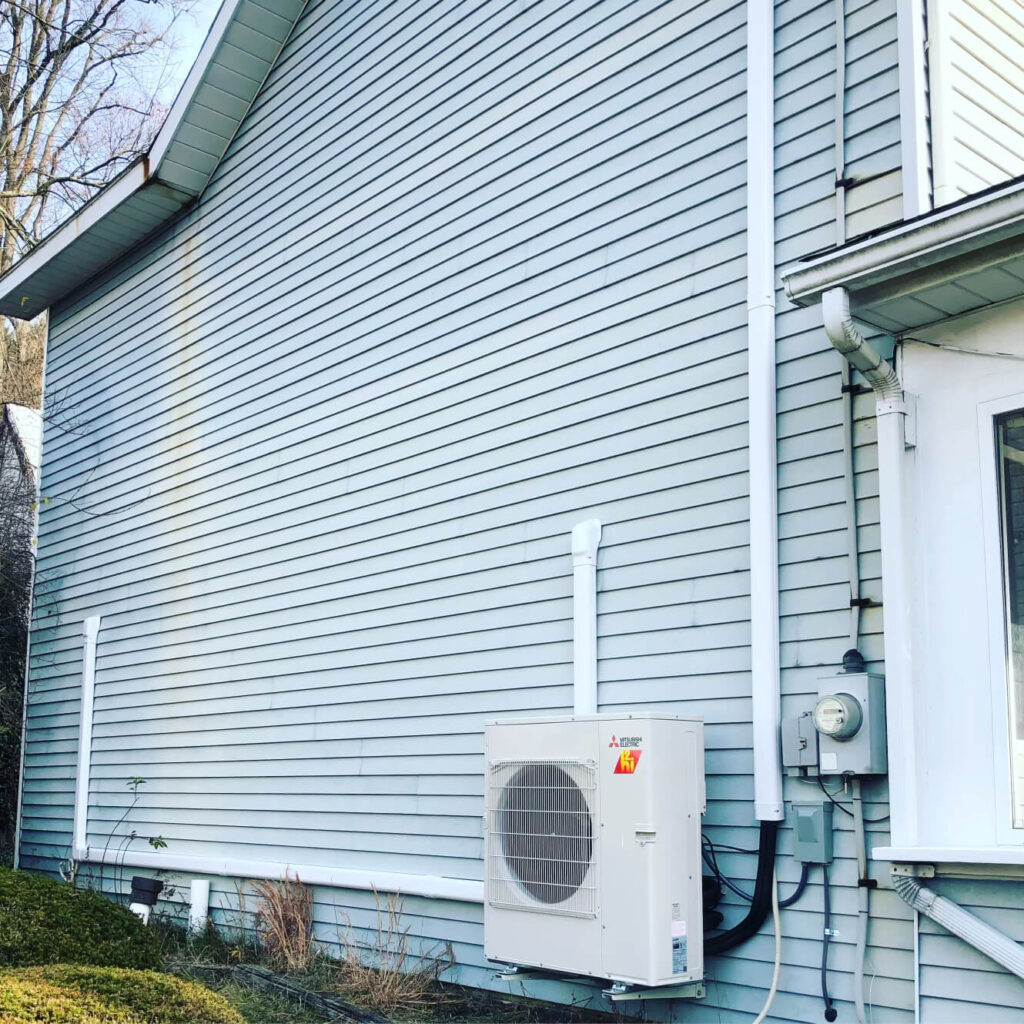
A mini split system is a type of ductless HVAC system designed to heat and cool individual rooms or zones. It consists of an indoor unit, an outdoor unit, and refrigerant lines that connect them.
- Indoor Unit:
The indoor unit contains a heat exchanger that distributes conditioned air into the room. Depending on your layout, this unit can be mounted on a wall, ceiling, or floor. Many models offer design flexibility to blend with different room aesthetics.
- Outdoor Unit:
The outdoor unit houses a heat exchanger, compressor, electronic expansion valve, sensors, and control boards, all of which are engineered to maintain system performance.
The indoor and outdoor units connect through a small opening in the wall using three main elements:
- Refrigerant lines that transfer heat
- Communication and power cables that link system controls
- A drain hose to remove condensation
Together, these parts allow for efficient temperature regulation without extensive ductwork, which reduces both energy loss and installation time.
How Mini Splits Operate
At the core of a mini split system is the heat pump process. It operates much like a traditional heat pump, transferring heat rather than generating it. The system uses refrigerant to move energy between the indoor and outdoor units, depending on the mode you select.
1. Cooling Mode
In cooling mode, the mini split absorbs heat from your indoor air and releases it outdoors. Here’s how the cycle works:
- The compressed liquid refrigerant exits the outdoor heat exchanger and travels through an Electronic Expansion Valve (EEV). The pressure drops, transforming the refrigerant into a cold mixed vapor state.
- The refrigerant flows into the indoor heat exchanger through the liquid line, a small copper tube.
- The indoor unit draws warm air from the room and passes it over the cold refrigerant coil. As the air cools, the refrigerant converts into a gas, capturing heat from your space.
- The gaseous refrigerant then travels back to the outdoor unit through the larger suction line.
- After entering the outdoor unit, the refrigerant is compressed to release the absorbed heat outside before condensing back into a liquid to repeat the cycle.
This continuous process removes heat efficiently, keeping indoor spaces cool and comfortable with minimal energy waste.
2. Heating Mode
When you need warmth, a mini split system reverses the process. Even when outdoor temperatures are low, these systems can extract heat from the air.
- The outdoor unit captures heat from the air and adds the heat created during compression.
- The heated refrigerant flows to the indoor unit, which releases the warm air into your space.
- As the heat transfers indoors, the refrigerant cools and returns to the outdoor unit to collect more heat.
This reversible cycle creates a steady and efficient source of heating without requiring fossil fuels or large duct systems.
Inverter Technology and Modulation
One standout feature of any modern mini split system is Inverter Technology. Traditional systems run at one or two fixed speeds, often cycling on and off, which consumes extra energy. A mini split instead continually adjusts (or modulates) its compressor and fan speeds to match the exact cooling or heating demand in your room.
- When more heating or cooling is needed, the system speeds up to deliver full capacity.
- When the demand is low, it slows down, consuming only the power required to maintain comfort.
This precise control makes the mini split more efficient, quieter, and longer-lasting than traditional HVAC systems.
What Are the Benefits of Mini Split Systems
Mini split systems come with several key advantages that make them ideal for diverse spaces and climates.
1. Energy Efficiency: Unlike traditional HVAC systems that rely on ductwork, a mini split delivers air directly into the conditioned space, improving energy efficiency and comfort while allowing precise temperature control. In fact, ENERGY STAR-certified mini splits use up to 60% less energy than standard home electric radiators.
Plus, mini splits move heat rather than create it, which consumes less energy. Their inverter-driven compressors adjust speed based on need, reducing power waste. Multi-zone models can handle several areas using one outdoor unit, saving both space and cost.
2. Zoning Capabilities: A multi-split system divides your space into zones, each controlled independently. You can heat or cool only the rooms you use most, which saves energy and increases comfort. This zoning flexibility offers a personalized experience ideal for families, offices, or multi-room commercial areas.
3. Flexible Installation: Mini split installation is simple compared to ducted systems. Technicians only need a small wall opening for the refrigerant and communication lines. This feature is especially beneficial for retrofit projects, older buildings, or rooms without existing ductwork.
4. Improved Comfort: Consistent temperature control, quiet operation, and improved humidity management make mini split systems an excellent choice for year-round comfort.
Inaba Denko America’s Solutions for Ductless Mini Split Systems
Inaba Denko America provides high-quality accessories that support efficient mini split installation and long-term system reliability. These products combine Japanese engineering excellence with practical solutions for the North American HVAC market.
- Slimduct SD Lineset Cover:
When used in mini split systems, the Slimduct SD Straight Duct protects refrigerant lines from direct sunlight, pests, and harsh weather, preventing insulation degradation and efficiency loss.
Lineset covers, like the Slimduct RD Commercial, also improve the professional appearance of an installation, offering a clean, professional finish that’s ideal for commercial buildings and visible outdoor setups. - Drain Hoses and Insulation:
Insulated drain hoses and accessories provide clean condensate removal and reduce the risk of moisture buildup or leaks in mini splits. These components also help maintain consistent performance by preventing energy loss and protecting against temperature changes that could affect refrigerant flow. - Mounting Systems:
Mounting or support accessories are built for durability and ease of use, making them ideal for secure mini split installation. They support proper equipment alignment, provide structural stability, and help reduce vibration.
Pipe support accessories further reinforce installations by keeping refrigerant lines organized, supported, and protected from environmental or mechanical stress.
Using these components during your mini split service helps you prolong system life, maintain performance consistency, and meet local building, fire, and safety codes for exposed refrigeration lines.
Make Your Mini Split Installations Stress-Free
A mini split system offers an energy-efficient, flexible, and quiet way to heat and cool your home or business. Its compact design, advanced inverter technology, and zoning capabilities make it an ideal choice for almost any space. With proper mini split installation and regular service, you can enjoy reliable performance for many years.
Inaba Denko America offers premium accessories that help your system look better, work efficiently, and meet mechanical standards. Whether you are a contractor, distributor, or property owner, our solutions make your mini split jobs easier.
Please reach out to our experts online or call 310-943-7520 to place your order or get more information about our products.
FAQs about Mini Splits
1. How long does a mini split system last?
A high-quality mini split system typically lasts 15 to 20 years with regular professional maintenance. Schedule expert mini split service at least once a year to extend your system’s lifespan and maintain energy efficiency.
2. Can I install a mini split myself?
DIY installation is not recommended. Professional mini split installation means correct refrigerant handling, electrical connections, and system pressure testing, which are essential for safe operation and warranty protection.
3. Are mini-splits suitable for large homes?
Yes, a multi-split system can serve multiple rooms or entire homes. Each indoor unit operates independently, offering customized control for larger properties.
4. Do mini splits work in cold climates?
Modern mini split systems with advanced inverter compressors perform well even in sub-zero temperatures.
5. How often should I schedule mini split maintenance?
For optimal performance, schedule mini split service at least once a year. Filter cleaning should occur more frequently, which is usually every one to three months.
6. Will a mini split lower my energy bills?
Yes, because of the variable-speed inverter technology and zoned design, a mini split system often reduces energy costs compared to central HVAC or window units.
